Cost Drivers in a Big Sky Custom Home
What really moves the budget (and what’s worth it)
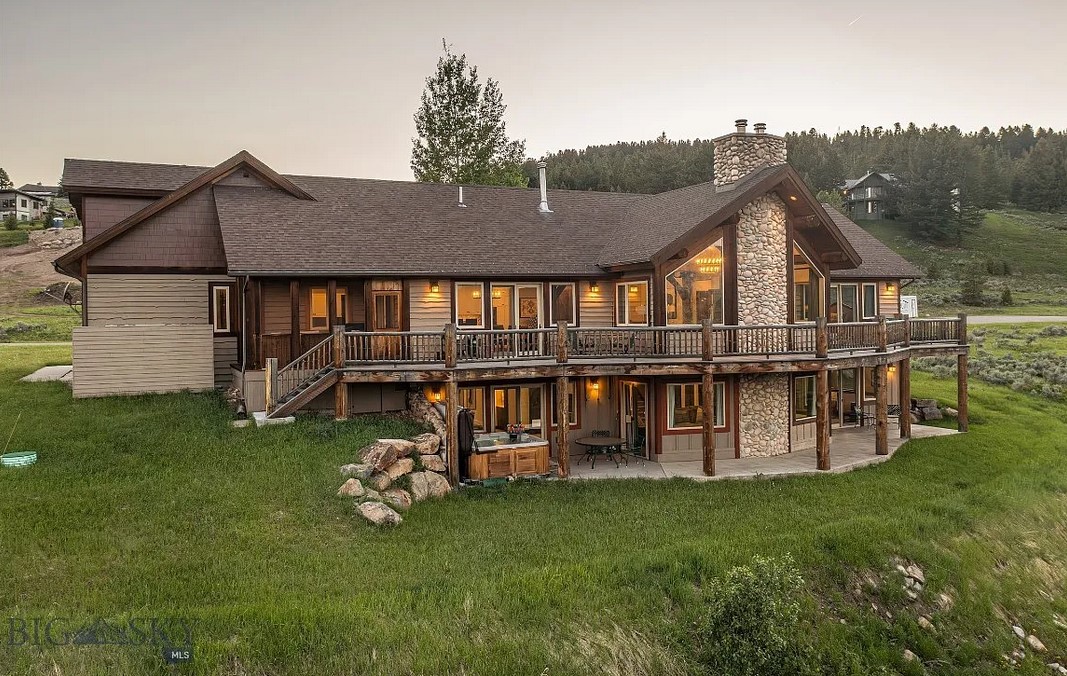
Building in Big Sky isn’t just “building a house.” It’s building a high-performance home in a mountain environment with weather, logistics, and scheduling realities that can add cost fast — especially if you don’t plan for them early.
Here are the biggest things that truly drive cost on a Big Sky custom build, and how to think about each one.
Site + access
This is the big one people underestimate.
Costs rise when a lot is:
- steep, rocky, or requires substantial excavation
- hard to access for concrete trucks, cranes, framing packages, or deliveries
- tight for staging (limited space for materials + equipment)
- far from services or requires long haul/delivery coordination
Why it matters: You can have the same house design on two different lots and see very different budgets.
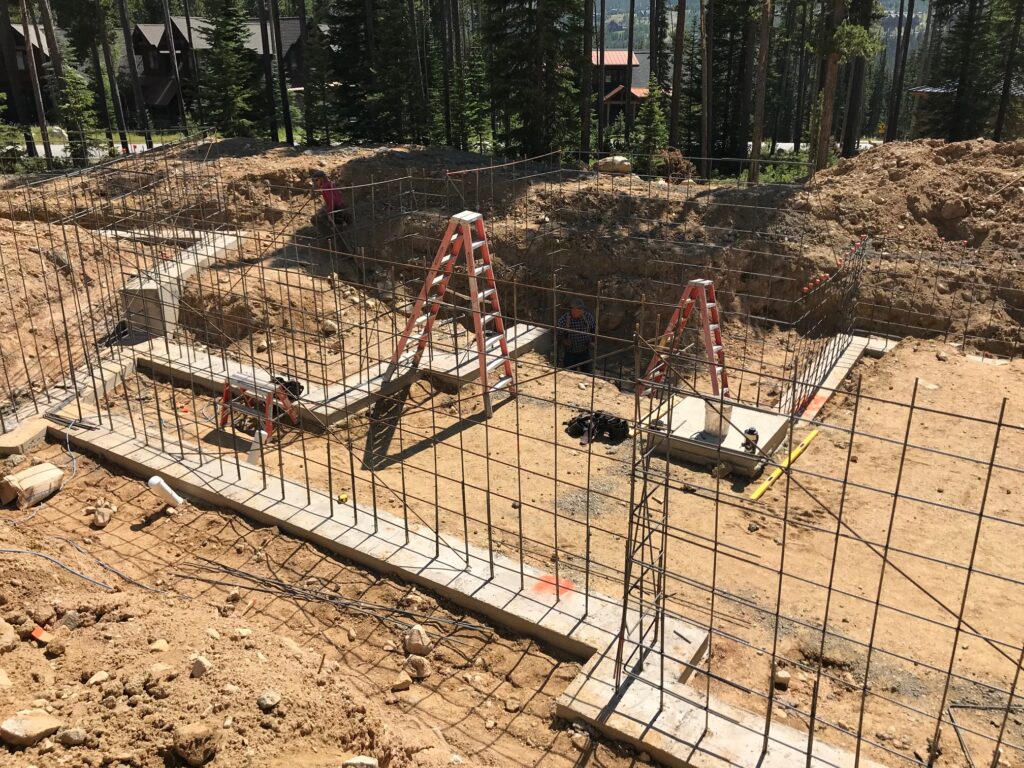
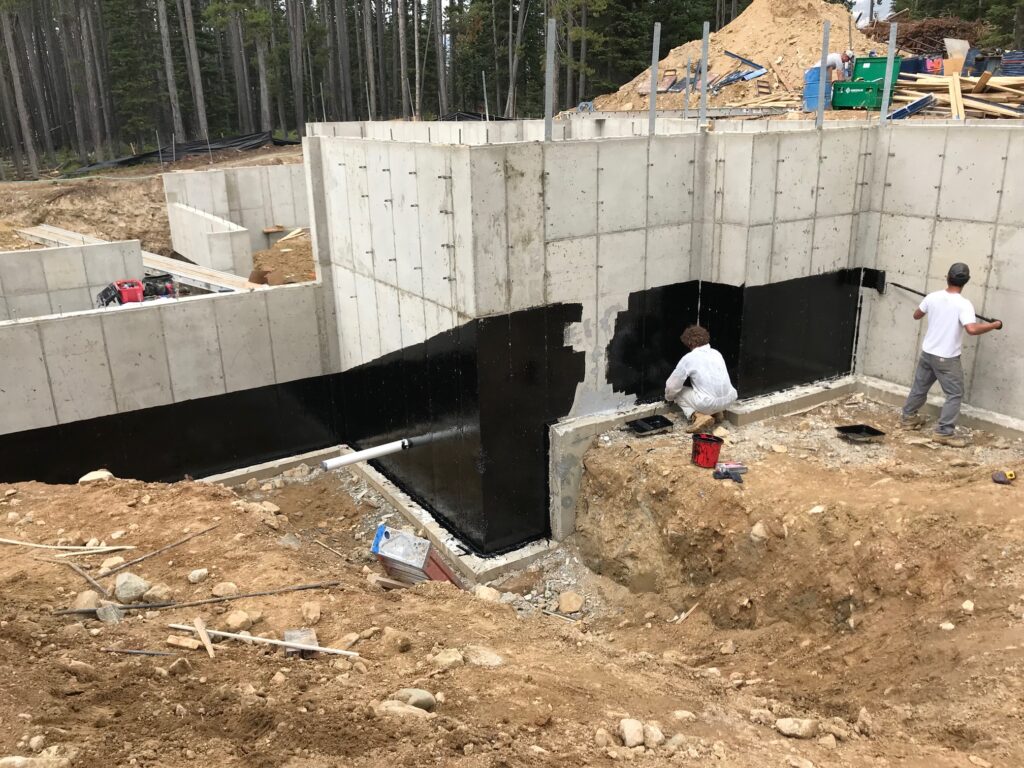
Foundation complexity
Foundations in Big Sky often aren’t “simple rectangles.”
Cost increases with:
Translation: the more the house has to “fight the hill.” the more the foundation costs.
Snow load + roof design
Roof cost is not just square footage — it’s complexity.
Higher costs come from:
- steep pitches and large spans
- complex rooflines (valleys, hips, dormers, multiple transitions)
- snow-shedding strategy and ice management
- premium roofing materials (standing seam, heavier systems, upgrades)
Rule of thumb: In Big Sky, a clean roofline is not only less expensive — it’s often smarter.
Building envelope performance (the “invisible” upgrades)
This is where “mountain comfort” is made.
Budget moves with:
- higher insulation specs
- advanced air sealing
- window and door packages (especially large glass and lift/slides)
- exterior insulation, and moisture management details
Worth it: This category is where you get quieter interiors, fewer drafts, better efficiency, and fewer cold spots.
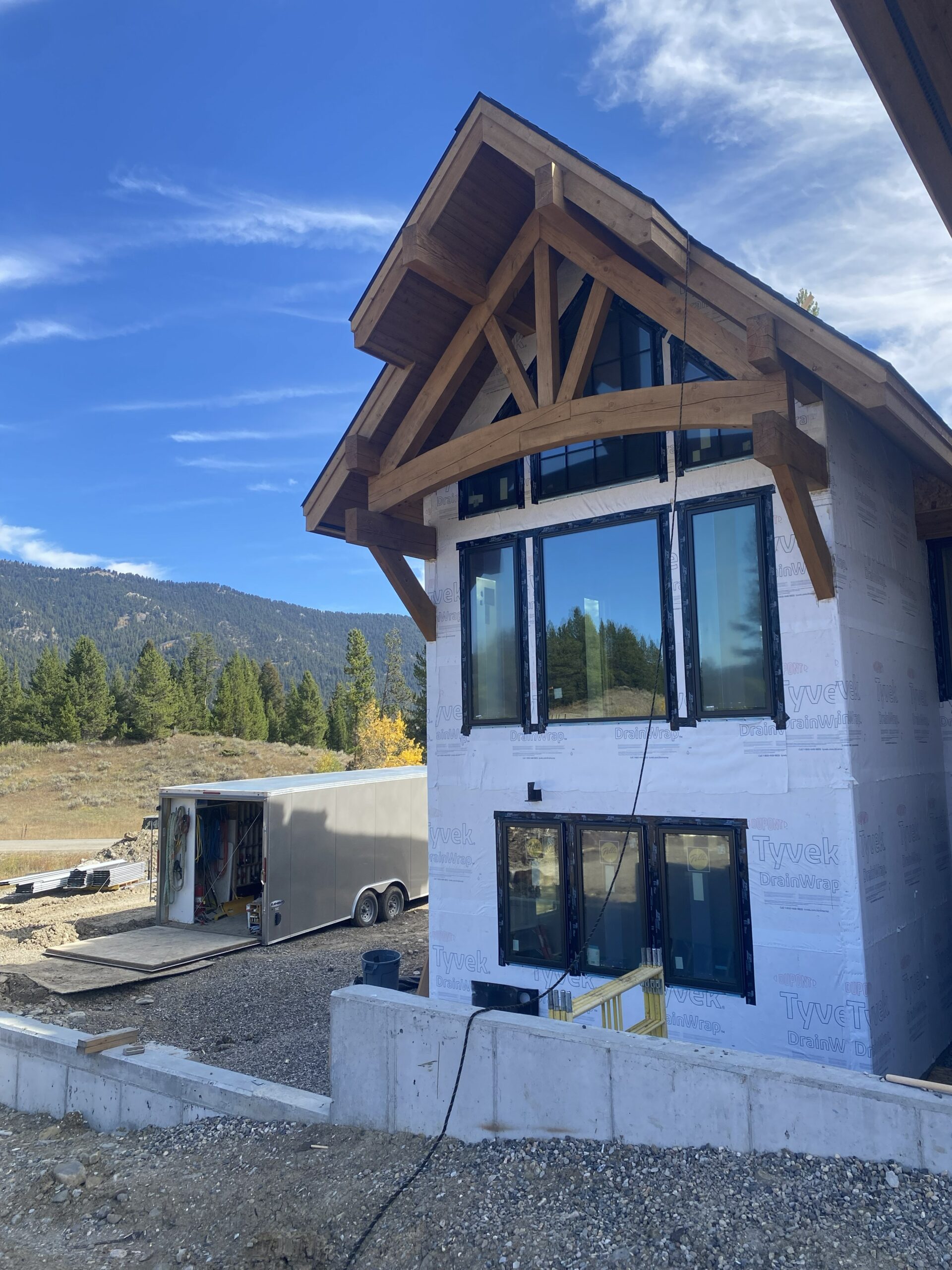
Window + Door Package
This is one of the fastest ways to add (or control) cost. Cost jump with:
Interior finish level and detail work
Big Sky homes are often “simple on paper, detailed in real life.”
Costs increase with:
- T&G ceilings (and especially vaulted T&G)
- custom built-ins, mudrooms, benches, shelving
- high-end trim packages and larger casing/base
- cabinetry complexity (custom sizes, specialty storage, premium finishes)
- natural stone and tile layouts (especially large format + complex patterns)
Bottom line: Finish level is where custom homes become truly custom — and it’s also where budgets can drift if decisions aren’t scoped early.
Mechanical systems
Mountain homes often require more thought here.
Cost drivers include:
- in-floor radiant heat
- multiple zones (common in larger homes)
- upgraded ventilation/HRV/ERV systems
- humidity control and comfort balancing
- backup heat strategies and smart controls
Worth it: Comfort is not optional in Big Sky. A well-designed system feels “effortless” year-round.
Labor and subcontractor availability
Big Sky is a high-demand market and timing matters. Stanghill Custom Builders removes many of these issues by completing a high percentage of the work themselves.
This is why an onsite General Contractor matters: We don’t have many of the normal scheduling issues. In addition, we control the building schedule and make sure the project is 100% ready for each subcontractor.
Logistics + lead times
This one surprises people because it’s not “a line item,” it’s a multiplier.
Cost increases with:
- specialty materials shipped from out of state
- long lead windows/doors/staining/cabinet timelines
- storage and protection on-site
- winter conditions
Planning saves real money here.
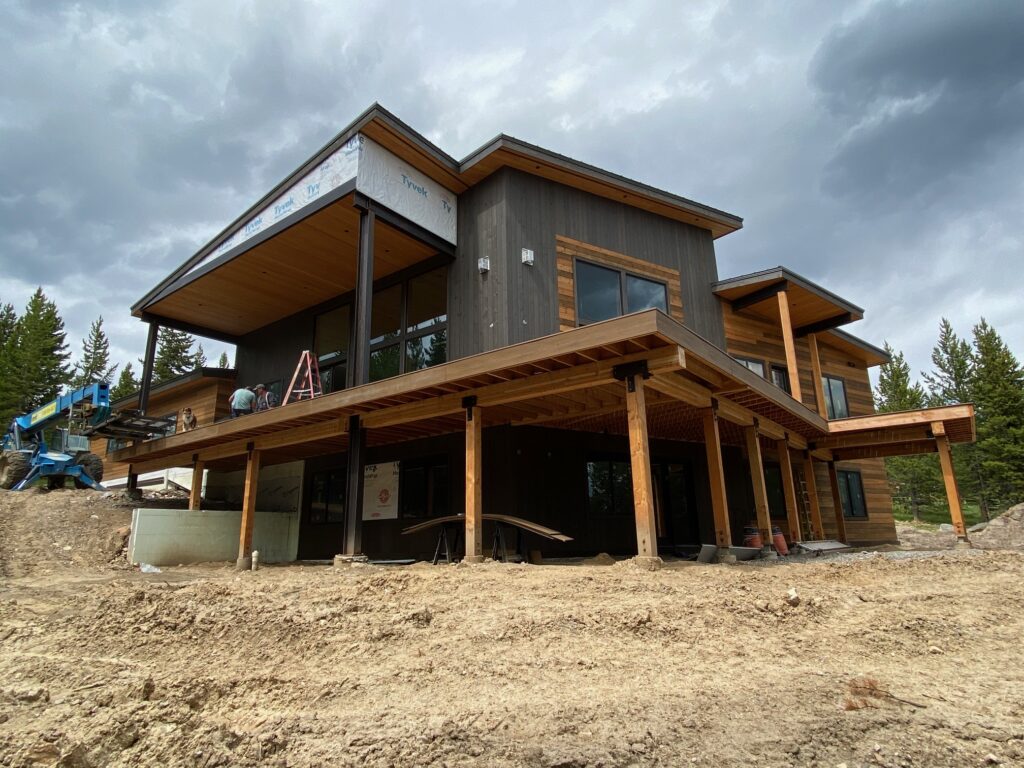
Outdoor Living + Exterior Details
Exterior work adds up quickly, especially with Big Sky expectations. Cost drivers:
A practical way to keep budget under control
Building a home in Big Sky stays on budget best when you:
- define your “non-negotiables” early (views, warmth, finishes, layout priorities)
- simplify structure where possible (rooflines + foundation)
- choose where to go premium (great rooms, windows to views, statement ceilings)
- keep decisions moving (late changes cost more than most people realize)
At the end of the day, the biggest cost drivers in a Big Sky custom home aren’t random — they’re the result of site, structure, performance, and finish level. When those are planned intentionally, you get a home that feels right in the mountains and performs beautifully for decades.
If you’re planning a Big Sky build and want help understanding where your budget will go — and where it’s worth investing — Stanghill Custom Builders would be happy to walk through the realities with you.